

Courage – #ISupportGary
“Courage as resistance to fear, mastery of fear, but not absence of fear.” Craig Silvey

Editor’s note: This post is pinned as an introduction to my work — explaining who I am, why I write, and the story that led me to question how dietary guidelines, public health messaging, and vested interests intersect. In particular, “Who decides what we eat, when we eat, and why?”
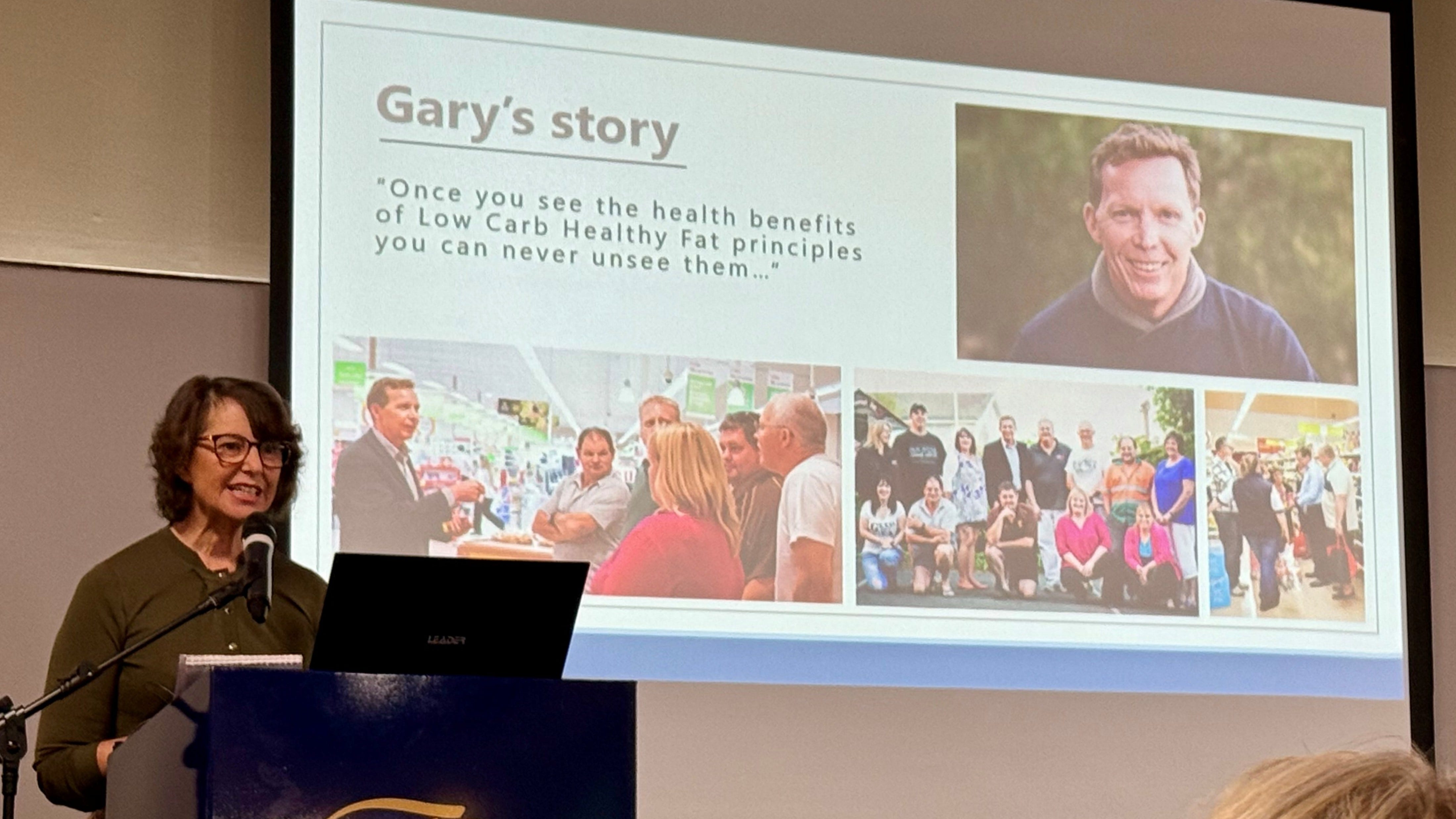
While a brave man may stand up for what he believes in, it takes courage to speak out when doing so invites ridicule, harassment, and even punishment — especially when those truths unsettle deeply held beliefs.
My husband, Dr Gary Fettke, is the most courageous man I know.
He prioritised patient safety — and his own integrity — over compliance with dietary and health guidelines that revealed themselves, when challenged, to be ‘plant-biased’ Rule-Books shaped by vested interests and religious ideology.
And he paid the price.
Gary’s Story
Gary spent nearly three decades as an Orthopaedic Surgeon in Launceston, Tasmania. He went to work every day with “the Perspective of a Patient; the Spirit of an Activist; and the Heart of a Healer,” a quote I heard Rich Joseph use to describe Dr Bernard Lowns years ago, and it resonated deeply.
Gary became frustrated by what he called band-aiding sick care. His working life was increasingly spent treating the downstream consequences of chronic metabolic disease: inflammation, weight-related joint issues, and non-healing diabetic ulcers.
In 2012, after improving his own health simply reducing sugar and processed carbohydrates in his diet, Gary began to question ‘hospital food.’ To him, it made no sense that a public hospital — a place where patients are meant to heal and recover — is the very place that is feeding them unlimited sugar and highly processed food, and not enough protein to heal, and then ‘dousing the fire’ with medication.
Hippocrates - “First do no harm.”
He encouraged interested patients to reduce sugar and processed carbohydrates to improve their health outcomes. He introduced his hypothetical Nutritional Model of Modern Disease to medical students as a Senior Lecturer at the University of Tasmania and to his peers, both within the hospital and as a regular speaker with Low Carb Down Under.
Naively, he believed the system would be interested.
He had no idea the system did not want to be fixed.
‘Silenced’
In 2014, Gary was vexatiously reported to the Tasmanian Medical Board by a dietitian at his hospital — not for patient harm, but for discussing sugar!
What followed was a two-and-a-half-year star-chamber investigation for suggesting there was a role for low carbohydrate, healthy fat principles in the prevention and treatment of metabolic disease, in particular Type 2 diabetes. There was no patient complaint, no evidence of harm, and no transparent process.
In 2016, Gary became, to our knowledge, the only medical doctor in the world formally ‘silenced’ from discussing nutrition with his patients. He was told “a medical degree does not qualify doctors to advise their patients to avoid sugar.” The ruling was life-long and non-appealable in a court of law.
He was allowed to operate.
He just couldn’t open his mouth.
Gary’s response was simple:
“I would rather be de-registered for improving health outcomes than stay silent and cause harm.”
Not an Anomaly
At first, we assumed this was professional overreach.
We were wrong.
As I investigated the expert witness assigned to the Medical Board in Gary’s case and began to look deeper, it became clear this was not an isolated incident, but part of a broader pattern where dietary guidelines and corporate vested interests intersected to shape public health policy. What appeared to be an individual disciplinary action was, in reality, the enforcement of protected nutritional doctrine.1
Gary wasn’t silenced for harming patients.
He was silenced for challenging beliefs that were institutionally, religiously, and commercially defended.
When I discovered #Cereal4Brekkie came after my husband… the mumma bear came out! For years I looked into “Who decides; What we eat, When we eat, and Why?” My research helped clear Gary’s name.
Cleared — But Changed
In 2018, all allegations against Gary were formally withdrawn. The National Medical Board issued a written apology, acknowledging errors and confirming no risk to public safety.
But the cost had already been paid.
Gary lost teaching roles, research opportunities, and institutional support. Our family endured years of stress and uncertainty. And yet, we received thousands of messages from people whose lives had improved after changing what they ate.
Those stories revealed the real danger of rigid guidelines enforced without clinical nuance: patient harm created by ideological certainty.
Gary’s lectures and podcasts on the role of nutrition in metabolic health have been viewed millions of times on YouTube. His message endures because it is grounded in biochemistry, clinical reality, and compassion.
He is an advisory board member for the Society of Metabolic Health Practitioners (SMHP) in the US, and a founding Advisor & Ambassador for the Australasian Metabolic Health Society (AMHS).
“Science evolves by being challenged, not by being followed.” Dr. Gary Fettke
He continues to mentor health professionals navigating the same regulatory pressures he faced.
Why I Write
Gary’s story is a case study in how dissent is managed when it threatens entrenched interests — commercial, institutional, and ideological.
This Substack exists because of that realisation.
Here, I write about:
how dietary and health guidelines became strict rule-books
how ideology and industry shape public health messaging
why ancestral food systems matter
the evolution of ‘plant-based’ messaging
the demonisation of animal protein and fats
and how courage shows up in unexpected places
The system tried to make an example of Gary.
Instead, he became a moral compass.
Belinda Fettke
Last updated: December 2025
Gary Fettke’s experience closely mirrors what Australian public health researchers describe as corporate political strategies — the use of professional bodies, guidelines, and regulatory processes to marginalise dissent and protect dominant policy narratives (Mialon et al., Public Health Research & Practice, 2023).
I have just come across this, thank you and him. I was type 2 diabetic. When I met my new wife I decided to follow a vegan diet at least in her company out of respect for her beliefs. I have never been skinny, I am not a small person, but my weight ballooned. I knew a bit about nutrition and then the only way to get good protein was to combine grains and pulses, but in order to do this one’s carb intake goes through the roof. So I gained a lot of weight as I don’t need to eat much to maintain weight and seem to gain weight by looking at food. I started to feel very tired and unwell and eventually a blood test showed that my glucose was out of control. For reference I don’t even like sweet food, this was all carbs and I largely cook from first principles so it wasn’t even processed food. I started the medication. I got repeated cellulitis infections - they get quickly out of control with me and I end up with sepsis - every time I stopped taking antibiotics it came back. I ended up on antibiotics for 9 months solid. And then I was told I had fatty liver. I did some research and found out the foods that help and I told my wife I’m sorry but I’m eating fish and eggs now. Within a month I was off antibiotics. 2 years later having thrown in meat and eating a good diet I am not diabetic. I remain convinced that veganism is tantamount to an eating disorder and, for all the health claims, it is an unhealthy diet.
I am blessed to know a few exemplary human beings.
You and Gary are among them.